
The Legend That is Alpe d'Huez
The Legend That is Alpe d'Huez Alpe d’Huez is a climb that every cycling fan around the world knows. It’s a true icon and an absolute must bucket list climb...
The Legend That is Alpe d'Huez
Alpe d’Huez is a climb that every cycling fan around the world knows. It’s a true icon and an absolute must bucket list climb for all enthusiasts. The climb is home to the French Alps and is frequently ridden up by cyclists from near and far through the warmer months, transforming into a popularly visited ski resort through the winter.
So how did it become such an icon? Alpe d’Huez has the Tour de France to thank for its quick climb up the prestige ranks due to its regular appearance throughout the race since its first inclusion in 1952 where Fausto Coppi took honours and went on to win the General Classification by over 28 minutes. Although the performance was something special, the climb was surprisingly not featured again until 1976. By that point, cycling as a sport had rapidly grown in popularity and the ski resort of Alpe d’Huez was also a much greater attraction, leading to a sea of spectators present on the climb to watch the stage and leaving Alpe d’Huez with a revamped reputation within the cycling world. From there, the climb has been frequently featured in the race with its last inclusion in 2018 marking the climb’s 30th appearance in the Tour de France.
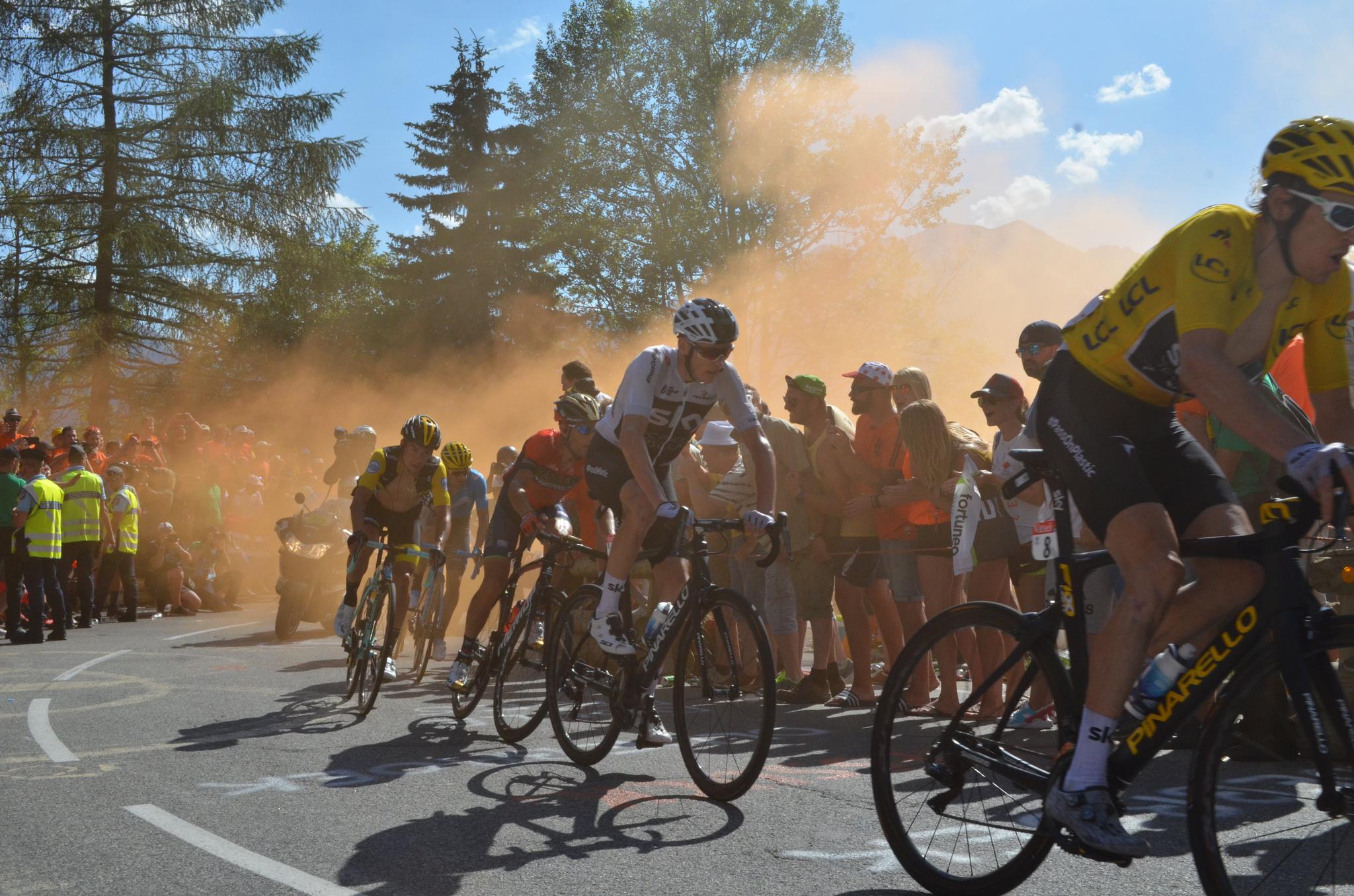
That same year, Geraint Thomas claimed an emphatic victory at the summit, marking history as the very first Yellow Jersey wearer to win on Alpe d’Huez. He went on to win the overall tour, adding to the list of former Alpe d’Huez champions of which the majority have gone on to take the Maillot Jaune.

Although not the most challenging climb in professional cycling by any means, Alpe d’Huez is far from a trot in the park with a demanding average gradient of 8.1% over 13.8km, travelling up to 1850m from the base at Bourg d’Oissans to the summit at the ski resort. It’s most famous however, for the 21 hairpin bends that sweep the climb from bottom to top, leaving cycling fans completely mesmerised as the peloton snake their way around each mythical switchback on Tour de France race day. Each bend has been famously named by former Stage winners of Alpe d’Huez.
To add to its unique terrain, Alpe d’Huez has the fans to thanks for the incredible party-like atmosphere present on race day, now attracting hundreds of thousands of supporters who line the entire climb creating an atmosphere like no other. Over the years, specific corners up the climb been famously marked - like the raging orange wave that has taken over corner seven, named Dutch corner.

Watching Alpe d'Huez on race day
On race day the road closes to traffic long before the peloton arrives, so fans ride or walk up early and claim a spot on the hairpins. Dutch Corner at bend seven is the loudest place on the climb. Pack water, food and a warm layer. You will be there for hours, and the summit sits at 1850 metres.
Our guests have stood on the Alpe on race day. Read one of those days in Alpe d'Huez on race day.
The 2026 Tour finished on the Alpe twice: stage 19 from Gap and stage 20 from Le Bourg d'Oisans. The 2027 route is announced in late October.
Want to be on the Alpe the next time the Tour climbs it? Join Priority Access and you will hear about the 2027 route and our Alps journeys first.

Related Experiences
Tour de France 2027
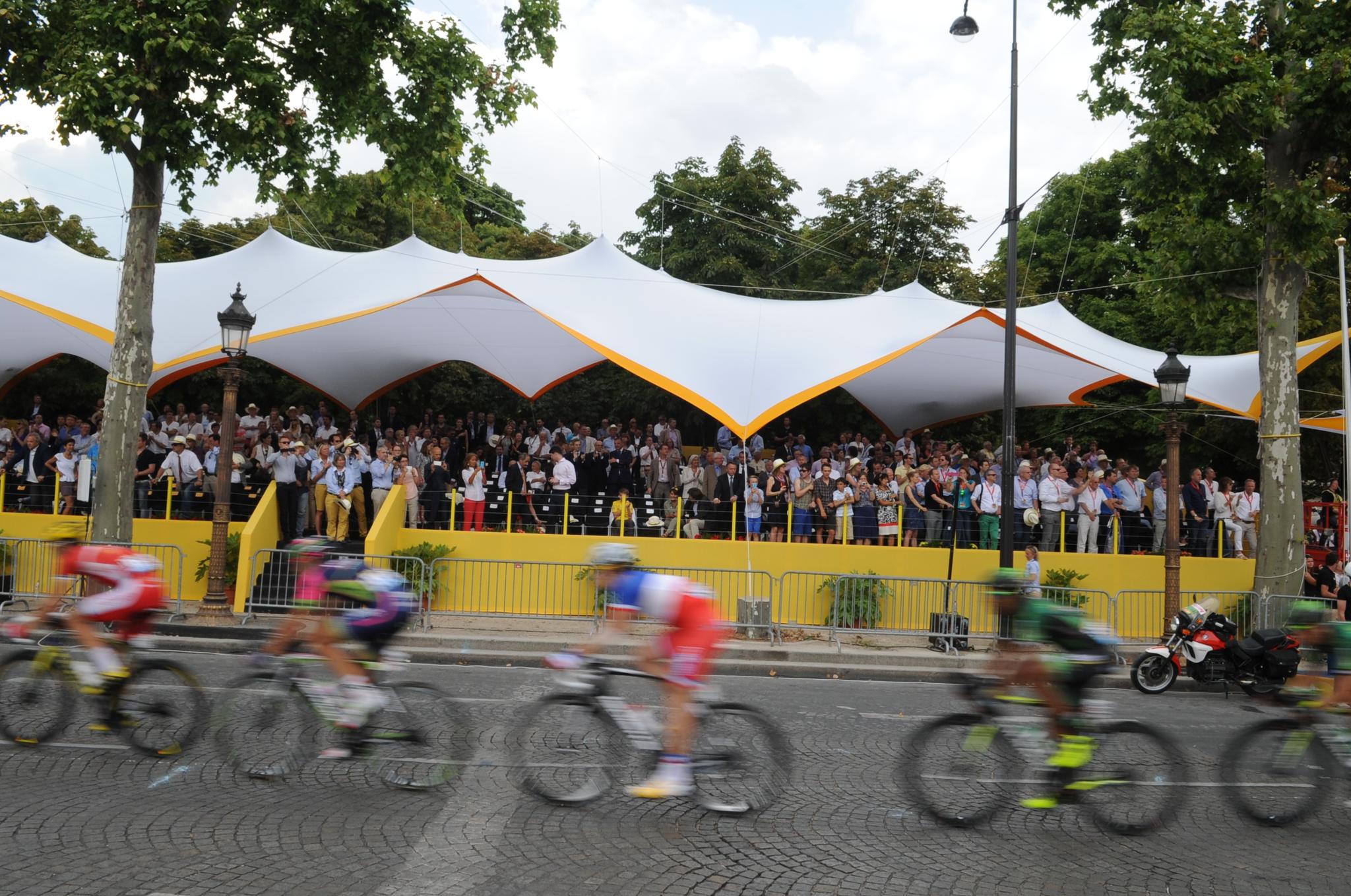
Champs Élysées Grandstand Access
Covered seats closest to the line for the final sprint into Paris, from 3 pm to 9 pm with complimentary drinks.

Tour de France 2027
VIP Izoard Finish Line Hospitality
Watch the peloton cross the line from metres away in ASO's Izoard marquee. Champagne, expert hosts and insider access at the finish.

Tour de France 2027
VIP Departure Village
Team buses, riders signing on and the stage roll out, from inside the VIP Departure Village.