
Tour Down Under Adelaide: The Complete Spectator Guide
This guide covers everything you need. Stage routes and times, the best places to stand, how to navigate road closures and public transport, what the festival atmosphere looks like beyond the racing itself, and what it means to attend with a genuine VIP experience behind you rather than just a good spot on the kerb.
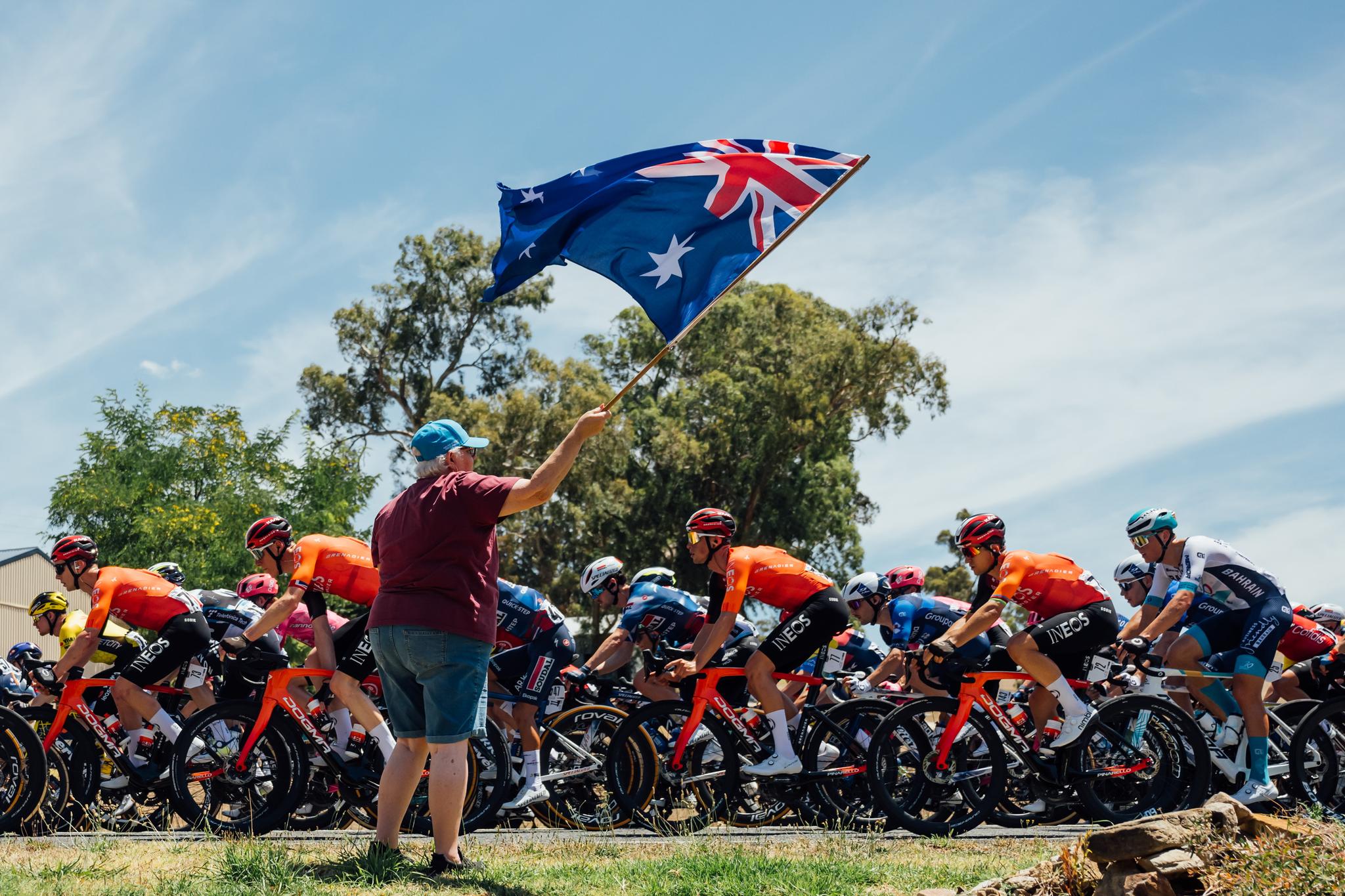
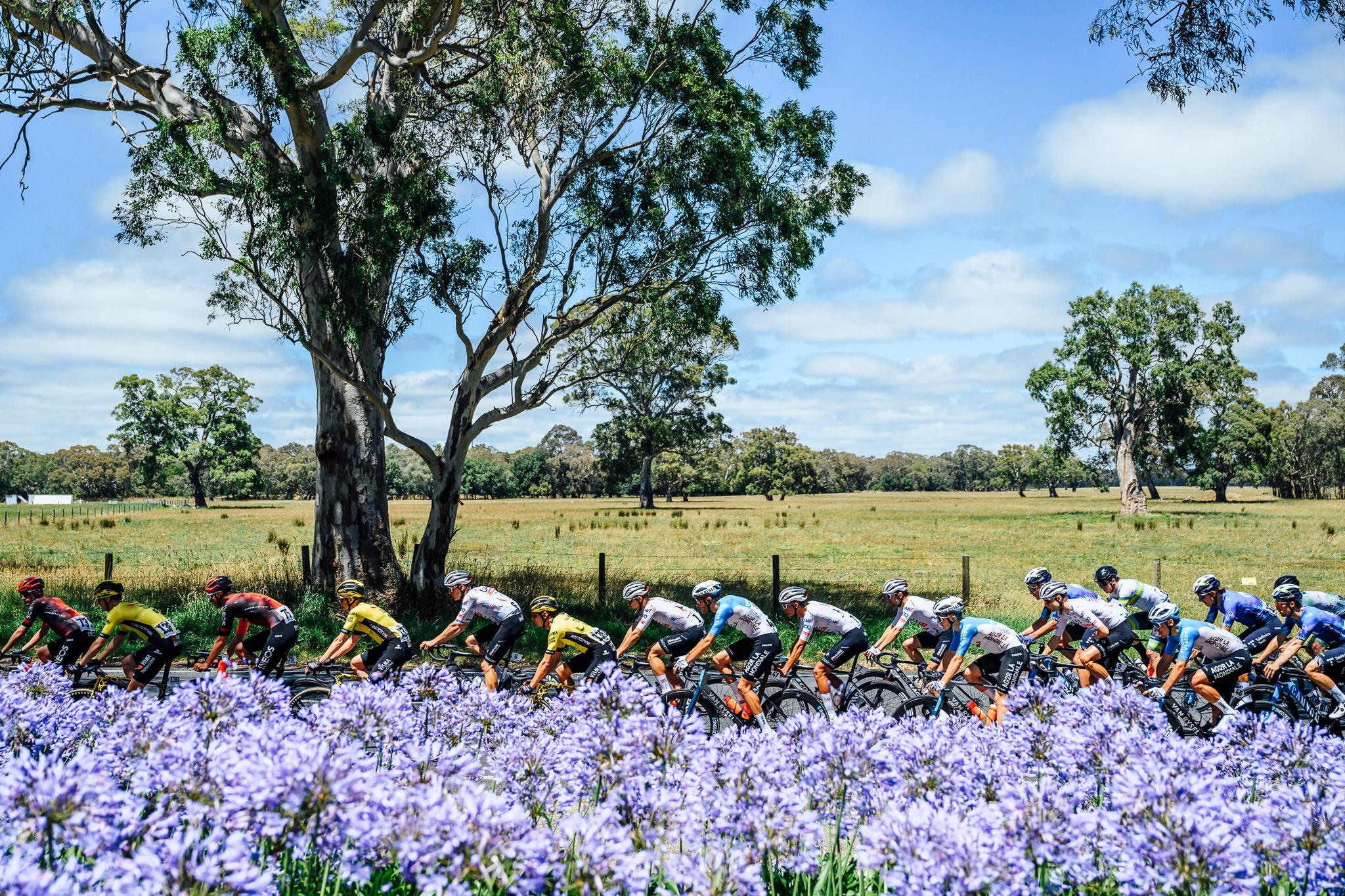
The Tour Down Under Adelaide, the Santos Tour Down Under, sits in a category of its own for Australian cycling fans. It is a full WorldTour race, the same tier as the Tour de France and the Giro d'Italia, and yet you can walk to the roadside, stand metres from the world's best riders, and watch it all unfold for free. At Mummu Cycling, we have been bringing guests to this race for over 15 years, and every January our crew comes back reminded of something simple: no other professional cycling race on earth is this easy to attend.
This guide covers everything you need. Stage routes and times, the best places to stand, how to navigate road closures and public transport, what the festival atmosphere looks like beyond the racing itself, and what it means to attend with a genuine VIP experience behind you rather than just a good spot on the kerb.
Why Tour Down Under Adelaide is Australia's most accessible WorldTour race
Free roadside viewing with genuine WorldTour racing
Most of the Tour Down Under Adelaide requires no ticket, no wristband, and no advance booking, roadside spectator areas and many Tour Village activities are free to everyone. You show up, find your spot, and the peloton comes to you. That is unusual for a race at this level. European events like Paris-Roubaix are technically free to watch from the roadside, but navigating rural France without local knowledge or organised transport is a genuinely different proposition for most Australians.
Here, the logistics are manageable and the racing is world-class. WorldTour teams bring strong early-season line-ups to Adelaide in January, many of the same riders who contest the Tour de France in July, and you can stand close enough to hear them breathe. Rider selections vary year to year, so check official team announcements for the race you are planning to attend.
January timing makes this race uniquely practical for Australians
There are no long-haul flights, no European summer queues, and no language barriers. South Australia in January is warm and dry, which makes full-day roadside spectating genuinely comfortable. The festival length varies by year, the 2026 edition ran across ten days from 16 to 25 January, so you can build a short break around it without burning a week of annual leave just getting there. Check the official race calendar for the current year's schedule before booking.
Adelaide's hotel market is competitive, and the city is compact enough that most venues, stage start points, and the Tour Village are within easy reach of the CBD.
A crowd culture that welcomes newcomers
The Santos Tour Down Under draws families, casual observers, and dedicated cycling supporters side by side. Nobody checks your credentials at the roadside. You do not need to know every rider or understand race tactics to enjoy the atmosphere. That said, once you have watched a real sprint finish or seen a breakaway caught on the Stirling climb, it is very hard to go back to watching on television.
How the race route unfolds across South Australia
The Adelaide city stages and race openers
Some editions of the Santos Tour Down Under open with a prologue time trial through Adelaide's CBD, typically starting from the Tour Village area at Victoria Square and finishing at the Victoria Park circuit. When it appears on the calendar, the prologue runs in the early evening, around 6:00pm local time, which creates a genuine festival atmosphere in the city streets with warm summer light and large crowds. Other years, the race opens with a road stage that heads out into the Barossa or the Adelaide Hills from a city or coastal start. Race formats shift from season to season, so confirm the schedule against the official event calendar for the year you are attending.
The climbing stages: Willunga Hill and Stirling
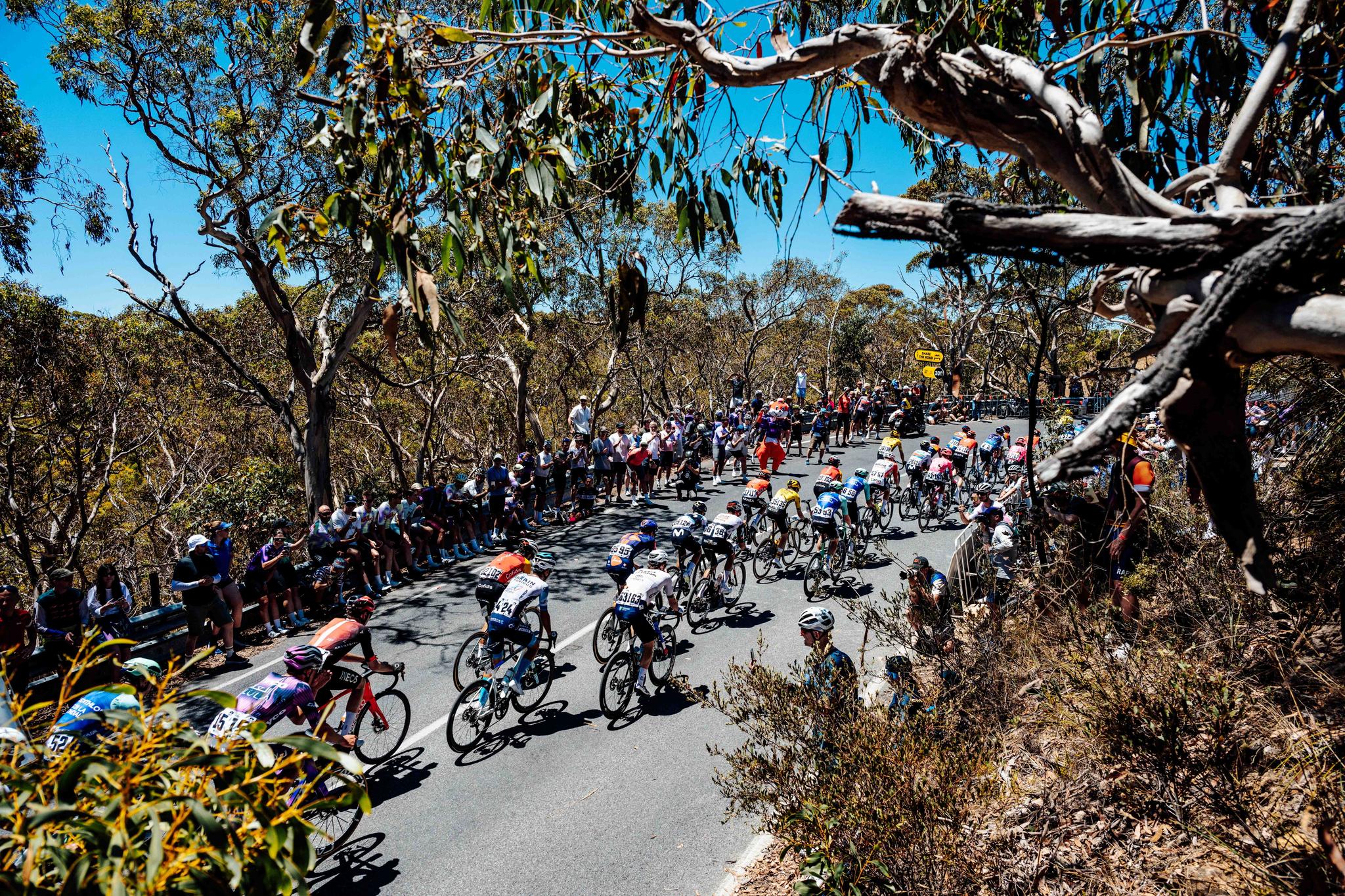
These are the stages that decide the race. The Willunga Hill finish is where general classification time gaps are created and defended. The crowd on Willunga Hill on stage day is dense, noisy, and electric. The Stirling finish is the other key battle, with the circuit through the Adelaide Hills bringing the peloton through Stirling township repeatedly before the final ascent to the line.
For the 2027 race, the Willunga Hill stage runs from Christies Beach on Saturday 23 January, and the Stirling finish follows on Sunday 24 January from Norwood. Confirm dates and routes against the official 2027 stages page as they are published. Both days are the centrepiece of race week and the ones to plan around first.
The Women's Tour Down Under: worth planning around
The women's event runs three stages in the latter part of race week, including a Willunga Hill finish and a Stirling finish in most editions. The racing is fast, tactical, and genuinely compelling. For the 2027 race, the women's stages run from Friday 22 to Sunday 24 January, coinciding with the final three men's stages. That means the same roads, the same viewing spots, and double the racing for anyone attending that weekend. Treat the women's event as a core part of your plans rather than a warm-up act.
Tour Down Under Adelaide: the best viewing spots in the city and the Hills
City and inner-suburb vantage points
The Tour Village at Victoria Square is the natural starting point for any first-timer. It is free to enter, open daily from 11:00am during race week, and includes the Team Zone, a Bike Expo, food and drink vendors, music, and shade. On the Friday evening before racing begins, the teams presentation at Victoria Square is where you see the riders up close before a single wheel has turned. Magill Road is worth arriving at early on women's stage days for the start-line atmosphere, with plenty of cafés and shops nearby. For finish-line energy in the city, North Adelaide delivers the crowd density to match.
Norton Summit Road, Stirling and Aldgate in the Adelaide Hills
Norton Summit Road is one of the strongest mid-hills vantage points and a solid choice for first-time Hills spectators. You get genuine elevation, city views stretching out behind you, and a clear sense of what professional cycling looks like when it hits a proper climb. Aim to arrive at least 90 minutes before the estimated pass-through time and position yourself on the upper section of the climb, where the gradient is steepest and the peloton slows enough to read the race.
Stirling town centre is the practical all-day base. The peloton passes through multiple times on circuit stages, the cafés and pubs stay busy throughout the day, and the atmosphere builds steadily toward the finish. The Aldgate intersection at Strathalbyn Road and Old Mount Barker Road is another strong pick for the same reason: multiple pass-throughs, cafés, pubs, and easy access from the main Hills road.
Willunga Hill: the climb that decides the race
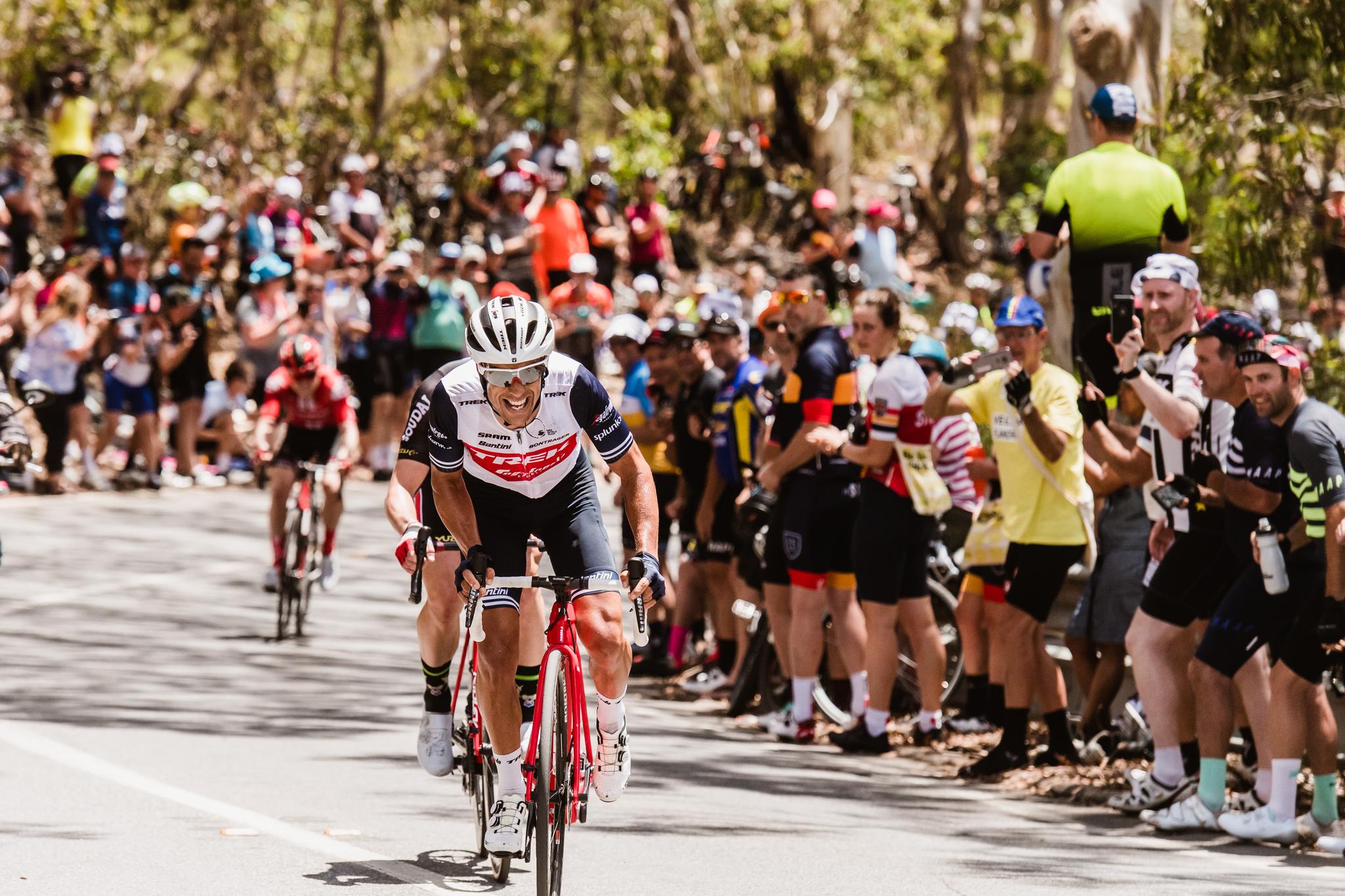
Standing on Willunga Hill on stage day is unlike anywhere else at this race. The road narrows, the crowd lines both sides, and you can see the riders coming from well down the climb. On-site facilities include two accessible toilets, a coffee van, a gourmet burger stall, and Mexican street food. Parking is limited: the Willunga Recreation Grounds offer a $5 cash-donation parking option via Railway Terrace gate, but most spectators arrive early and walk in from Willunga township. Get there at least two hours before the estimated finish time. The best spots are claimed well before the leaders hit the lower slopes.
Getting there and getting around during race week
Road closures and parking restrictions to plan around
For prologue editions, CBD street closures affect Union Street, King William Road, and War Memorial Drive. For Norwood stage starts, The Parade between Osmond Terrace and Portrush Road, along with Edward Street and George Street in Norwood, close from around 2:00am on the morning of the relevant stage day through to approximately 2:30pm. Temporary no-parking and tow-away zones accompany all closures. For specific streets and times matched to each day, check the official Tour Down Under road closures page, which is updated stage by stage in the weeks before the race.
Public transport, parking strategies and practical tips
Bus routes serving the city east end, Norwood, and CBD corridors are diverted during closure windows. The practical approach for city stages is to park outside the affected zone and use Adelaide Metro bus or train to reach the viewing area. For Hills stages, driving and arriving early is the most reliable option; public transport to Willunga Hill and Norton Summit Road is limited on race days. The official event app publishes real-time spectator travel updates throughout race week, and the annual Spectator Travel Guide is worth downloading before you leave home.
The festival atmosphere beyond the race itself
Teams presentation and the Tour Village at Victoria Square
The teams presentation on the Friday evening before racing begins is genuinely worth making the trip for. Riders walk the stage in team kit, team buses line the Victoria Square precinct, and the whole scale of a WorldTour race becomes real in a way that television never quite captures. The Tour Village stays open throughout race week as the social hub of the Tour Down Under Adelaide: food, merchandise, cycling culture, and the kind of conversation that only happens when thousands of fans gather around a sport with this kind of shared obsession.
Evening entertainment, food and the Adelaide dining scene
Adelaide does this part well. The city's food and wine scene is strong enough to build a full evening around on its own, and race week adds an extra layer of energy to Rundle Street, the Central Market, and the broader east end of the city. McLaren Vale is a 45-minute drive and a legitimate half-day add-on for anyone extending their stay. The Barossa Valley sits to the north. Post-stage afternoons in Adelaide during race week have a particular rhythm: the conversation is good, and the wine is better.
Taking the Tour Down Under Adelaide experience to a different level
What a guided spectator experience actually includes
Attending the Tour Down Under on your own terms is entirely achievable, and this guide has given you everything you need to do exactly that. But there is a real difference between watching from a good spot and genuinely being inside the race. A guided spectator experience handles transport between stages, secures premium viewing positions, puts someone next to you who understands the racing deeply, and removes the logistical stress of moving between multiple locations in a single day.
In terms of cost, the market for Tour Down Under experiences runs from around AUD 545 to AUD 595 for single-stage VIP hospitality at specific finish locations, up to AUD 2,755 and above for multi-day packages with hotel, transport, and guided access included. These figures help calibrate expectations; what is included varies significantly by operator, so it is worth comparing what each package actually delivers in terms of access, positioning, and insider knowledge.
How Mummu Cycling approaches the Tour Down Under
Mummu Cycling has been embedded inside professional cycling for over 15 years. The founders, Stuart O'Grady and Cadel Evans, are not hired talent or brand ambassadors: they are the business. O'Grady won Paris-Roubaix in 2007. Evans won the Tour de France. That changes what access looks like and what conversations happen around the race.
For the Tour Down Under, Mummu offers a curated VIP experience built around the race's key stages. The Stirling Finish VIP Hospitality for the 2027 race is priced at $999 inc GST, and longer Race Journey packages combine guided riding on the iconic Adelaide Hills roads with race-week hospitality and logistics handled end to end. This is not a seat on a bus and a view from behind a barrier. It is for the fan who wants to be closer to the sport, not just nearby. Get in touch with our team to see what is available for the 2027 race.
Plan the trip, then make it count
The Santos Tour Down Under is one of the few sporting events in the country where the free experience is genuinely excellent, and the premium one is worth every dollar. Roadside access puts you metres from WorldTour racing at no cost, the Tour Down Under Adelaide festival atmosphere is unlike anything else on the Australian sporting calendar, and the January timing makes the whole thing easy to build a proper trip around.
If you are going for the first time, lock in Adelaide accommodation early, download the official Spectator Travel Guide, and anchor your stage-day plans around Willunga Hill and the Stirling finish. Those two days are the ones people come back talking about.
If you want more than the roadside view, reach out to the team at Mummu Cycling. We will walk you through what Tour Down Under Adelaide looks like from the inside, and take it from there.
Related Experiences
Tour Down Under 2027
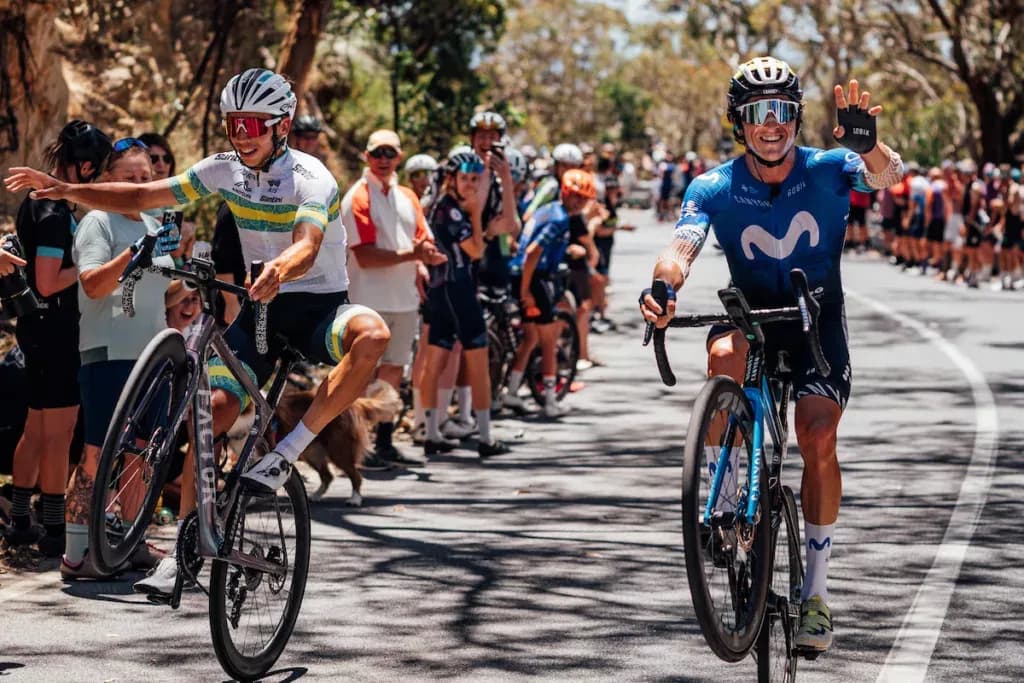
Willunga Hillside Social
Finish‑line vibes, drinks in hand, pulse racing.
 Booking Open
Tour Down Under 2027
Stirling Finish Hospitality
Stirling’s centrepiece. Podium-close. Elevated access.
 Sold Out
Tour Down Under 2027
Tour Down Under Cycling Journey
Ride the 2026 Santos Tour Down Under like an insider. Join Mummu Cycling for 6 days of pro-level riding, VIP access to Willunga and Stirling stages, premium hospitality, and unforgettable moments.