
Riding the Same Roads as the Pros
The roads the Tour de France uses are public roads. They belong to communities, farmers, commuters, and anyone with a bicycle and a reason to ride. For three weeks each July, they belong to the race. For the other forty-nine weeks, they belong to everyone else.
Mummu's ride programme places guests on these roads the day before the race uses them. The timing is deliberate. The stage infrastructure is being installed — barriers, signage, television cables, timing equipment — which transforms an ordinary French road into something that looks and feels like a race course.
The experience of riding a Tour de France stage route is different from riding the same roads at any other time. The barriers narrow the road. The painted distance markers count down from ten kilometres. The viewing platforms, empty and expectant, line the roadside at the points where tomorrow's decisive moments will occur.
On mountain stages, the transformation is most dramatic. The climb is the same gradient, the same length, the same switchbacks. But the barriers, the markers, and the knowledge of what will happen here in twenty-four hours change the effort from physical to contextual. Every pedal stroke is measured against the speed the professionals will sustain. Every hairpin is observed for what it will mean during the race.
The group rides at its own pace, which varies. Faster riders push ahead on the climbs and wait at summits. Slower riders settle into rhythms that the gradient dictates. Nobody is racing. The day's purpose is reconnaissance, not competition.
At the summit of a mountain stage, the group pauses at the spot where the finish line will be. The road is empty. The barriers are in place. The infrastructure awaits the event.
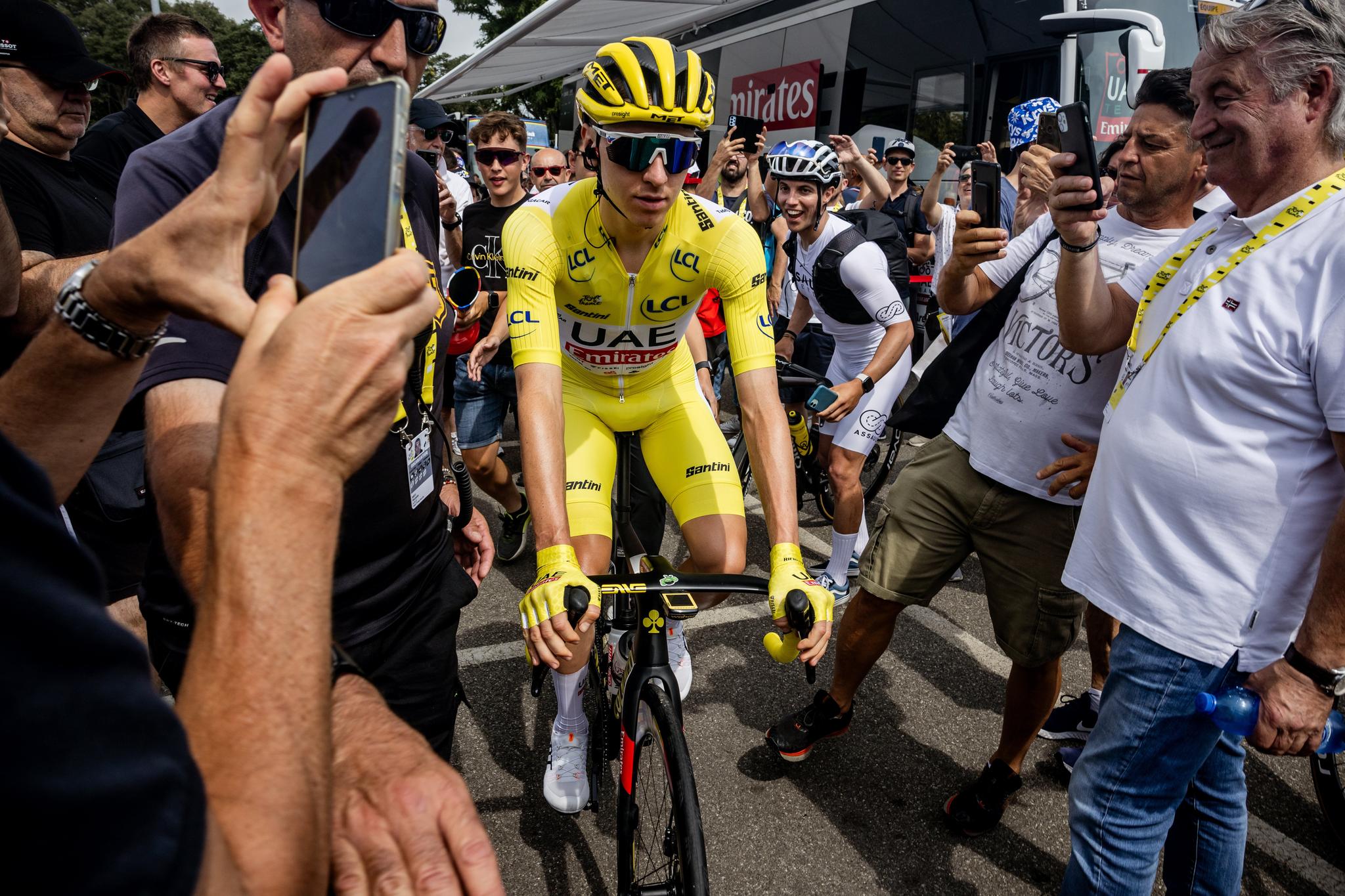
Tomorrow, this same metre of road will be crossed by the yellow jersey. Today, it was crossed by twelve people who rode it because they could.
The roads don't distinguish between the two groups. They're just roads. What changes is who's riding them and what it means.